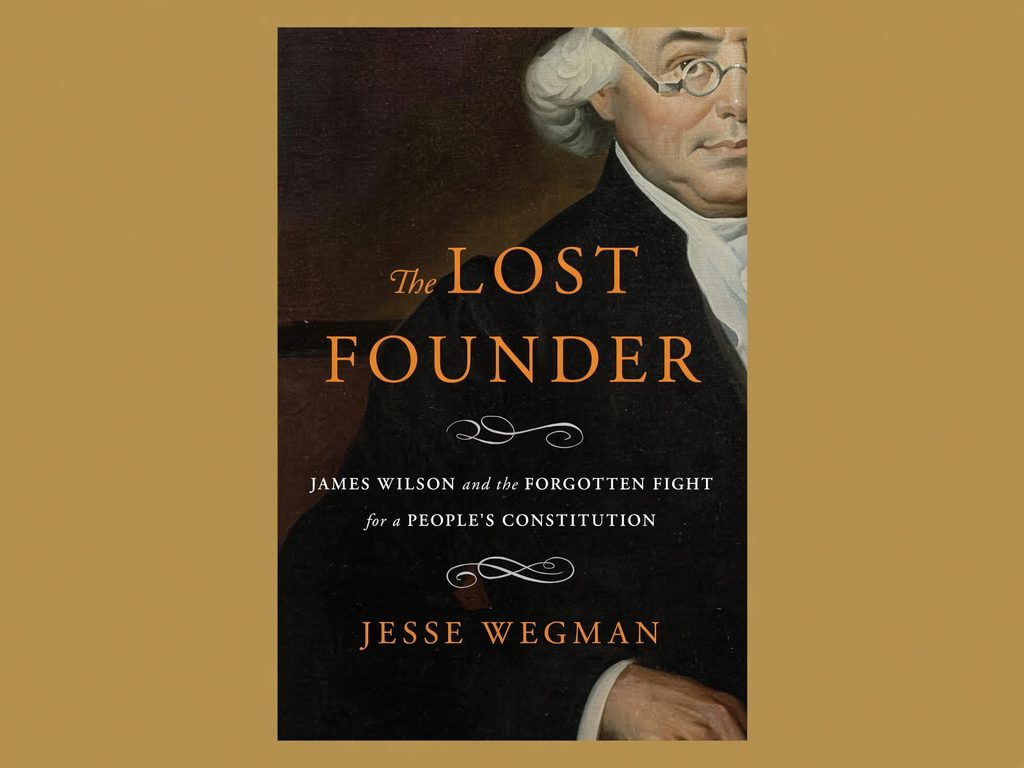
As the nation marks its 250th anniversary, Jesse Wegman’s new biography The Lost Founder has brought fresh attention to James Wilson, the Institute’s namesake. Wilson, the Scottish-born signer of the Declaration and Constitution, author of the first full draft that began with “We the People,” and one of the first Supreme Court justices, certainly deserved a fresh biography. But Wegman, a former New York Times editorial board member and Brennan Center senior fellow, presents Wilson a bit differently than JWI does. Wegman’s Wilson is a democratic champion of popular sovereignty whom the contemporary left can claim. Yet Wilson’s own writings, above all his Lectures on Law, rest on a deeper foundation of natural law that resists easy modern categorization.
On this episode of the Anchoring Truths Podcast, we discuss the recent Anchoring Truths symposium on the book. With us are two authors of pieces in that symposium. Roberta Bayer is Professor of Political Philosophy at Patrick Henry College; she holds a doctorate from the University of Notre Dame and has written widely on the Scottish Enlightenment and the American Founding. Her essay asks what Wegman misses by underplaying Wilson’s insistence that “We the People” stands under God. Candace Terman is an adjunct professor of law and government at Regent University; she earned her PhD in Government from the University of Texas at Austin. She contends that Wilson is best understood as America’s Lord Coke, treating the common law as an inductive science of experience that aligns positive law with natural law.
Read Bayer’s entry in the symposium
Read Terman’s entry in the symposium