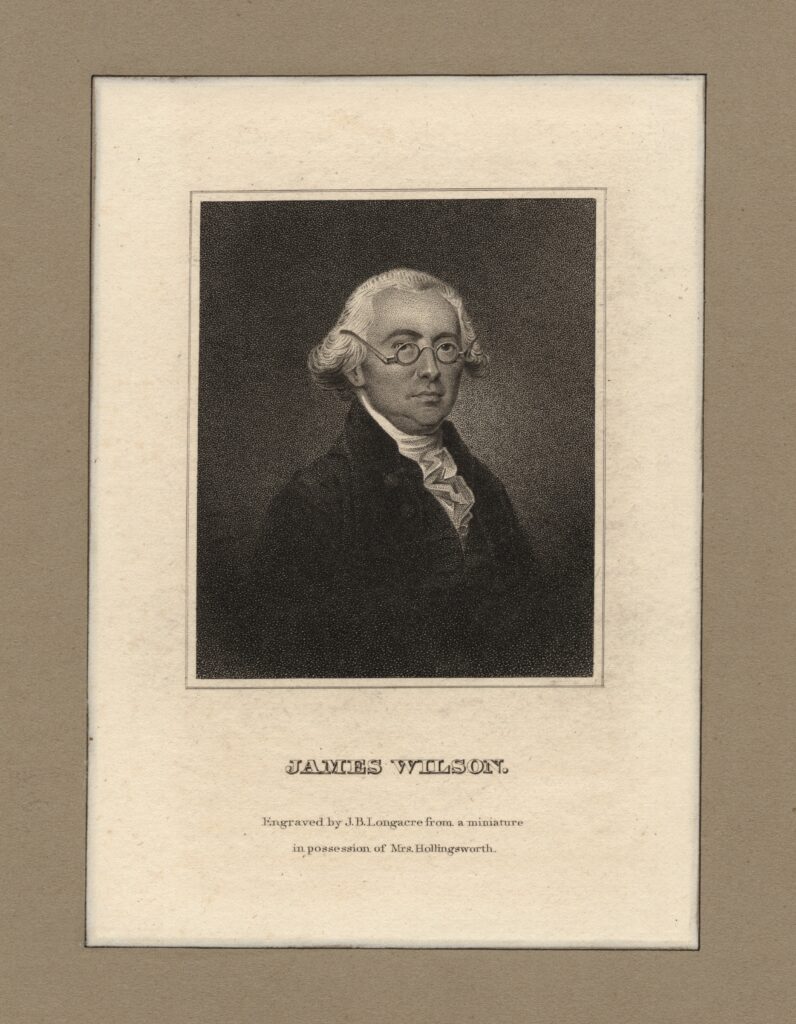
In the introductory paragraph to his dissenting opinion in Trump v. Barbara, Justice Samuel Alito rightly calls the decision one of the most important in the history of the Supreme Court, or, as James Wilson might have put it, Trump v. Barbara is a case of uncommon magnitude.1 Justice Alito then goes further to say he believes the Court’s decision to be a serious mistake, the reasons for which are quite evident. The Court protected from deportation those who have no meaningful ties to the nation and extended a broad welcome to foreigners seeking the benefits of citizenship for their children—both of which could no doubt in time erode the nation’s social and cultural fabric. The Court also warped and perverted the meaning of the 14th Amendment, that great and noble provision which, for the first time, secured for all citizens those rights which our government was first formed to protect and expand. Even with these two serious mistakes, the Court’s gravest sin was degrading the meaning American citizenship itself, supplanting the fair principles which buttress our Constitution with those of an old order which we long ago casted off, and thus compromising any just claim we have to self-government.
The difficult question of sovereignty, the power to rule justly, was answered more than 230 years ago by Founding Father and Associate Justice James Wilson with a series of treatises and lectures as well as his judgments as a member of the first Supreme Court bench. As it turns out, however, the holdings and reasonings laid out in the Court’s opinion in Trump v. Barbara are quite contrary, if not hostile, to Wilson’s espoused political and legal philosophy. We might do well to revisit Wilson’s writings to understand the errors of the Court in Barbara.
With his opinion in one of the first cases decided by the Supreme Court, Chisolm v. Georgia, Associate Justice James Wilson offered seminal theories on the American Constitution and on sovereignty and citizenship—much of which Justice Alito, though indirectly, appeals to throughout his rebuke against the majority opinion. Justice Wilson prefaces his opinion’s most substantial section by asking the all-important question; “who, or what, is a sovereignty”.2 He offers a lengthy description of English common law practice, of feudalism, and Britain’s King-In-Parliament system. Wilson then quotes the Commentator of the Laws of England, Sir William Blackstone, who says, “The law… ascribes to the King the attribute of sovereignty; he is sovereign and independent within his own dominions, and owes no kind of objection to any other potentate upon earth.”3 In all of Britain there was a singular sovereign, that is, the king. All others inhabiting the realm were but subjects to the king’s will and power. The concept of citizenship, what I understand to be sovereignty or ruling authority vested in ordinary, lawful inhabitants and residents of the commonwealth or polity, was quite simply absent from the British mind, its government structure, and its common law tradition. The chief difference between a citizen and a subject is that sovereignty is vested in the citizen, whereas the subject has no such claim to sovereignty. Such is the principal difference between America’s enduring constitutional republic and Britain’s 18th century King-In-Parliament system with feudal vestiges, under which Blackstone was writing.
Wilson affirms this contrast between the new United States Constitution and contemporary English common law with an erudite textualist interpretation of the then very young American Constitution. The clauses of the Constitution positively confer sovereignty upon ordinary Americans, rendering them citizens by providing for popular elections for the House of Representatives, establishing the Electoral College, and guaranteeing that each state be governed as a republic. Wilson therefore reasoned, “In this sense, the term [subject] can receive no application, for it has no object in the Constitution of the United States. Under that Constitution, there are citizens, but no subjects. ‘Citizen of the United states’.”4 Wilson, however, does not merely defer to the written text of the Constitution; he appeals to the Natural Law-underpinnings of the American polity, proclaiming the justness of popular sovereignty and the natural superiority of citizenship over subjecthood, writing, “laws derived from the pure source of equality and justice must be founded on the CONSENT of those whose obedience they require. The sovereign, when traced to his source, must be found in the man.”5 Laws deliberated upon and passed by a body of sovereign citizens are superior, from their very conception, by principles of natural justice and right. These citizens necessarily give their consent through participation in the political process, whether direct or indirect. Such laws stand above those enacted by the arbitrary will of a single sovereign and imposed upon a body of subjects.
Though born, raised, and educated in 18th century Scotland wherein political sovereignty was understood to be vested solely in the British King and in Parliament, Wilson—a keen student of the Scottish Enlightenment—espoused consent as a necessary component of a just law. He noted as much in his earlier Considerations on British Parliament, arguing that the consent of the governed is the entire moral basis upon which law and government rests: “no one has a right to any authority over another without his consent: all lawful government is founded on the consent of those who are subject to it”.6 Such is the gravity of citizenship and its superiority over mere subjecthood. The former allows for policymaking and self-government and so lends moral weight to obedience under the laws while the latter stifles and destroys that first right to self-agency and determination, natural and God-given to each man. Very clearly did the American Constitution, congruent with and indeed undergirded by the Laws of Nature, establish a government of citizens and a regime of popular sovereignty, that is, a government of the people, by the people, and for the people.7
In the majority opinion for the Court in Barbara, Chief Justice John Roberts takes a markedly different approach, quite radical indeed, to this doctrine of sovereignty, conflating it with that of feudal Britain in the late 17th century. Chief Justice Roberts opines, “With protection came allegiance, and with allegiance came the status of a natural born subject. This view crossed the Atlantic with the colonists—and was adopted with little fanfare after the Revolution, as ‘subject[s]’ of the sovereign became ‘citizens’ of the States. This common law of citizenship—known as jus soli, or right of the soil—prevailed in ‘each and all of the states’ after American independence, and continued to emphasize reciprocal ‘allegiance’ and ‘protection’.”8 The Chief Justice next asserts that the British custom of native subjecthood, Jus Soli, was adopted by the American colonists and persisted through the following century in the new world, notwithstanding the Revolutionary War, our complete separation from England, and the subsequent establishment of an entirely new country and regime; and so, Jus Soli was engrained in the common law of our nation from the outset. In essence, Roberts asserts that our late 18th century American ancestors and Founding Fathers appreciated the same theory of sovereignty as what was fixed in England by centuries of English custom and assent. That is, they understood sovereignty to be vested in the monarch, but separate and unknown to anyone without a valid claim to the throne—rendering every other inhabitant, even visitors or emigrants, mere subjects, stripped bare of any agency in the operation of that government which ruled them or in the creation of those laws that bound them. Importantly, as Justice Alito notes, “This theory of monarchical power and the status of the people provided the foundation on which the rule of birthright subjecthood stood.”9 Did our Founders, however, truly enshrine this theory in our Constitution?
In light of Justice Wilson’s treatment of sovereignty and given the gravity of sovereignty as a foundational principle in any theory of government, it is quite difficult to overstate the absurd reasoning of the Chief Justice’s opinion. Indeed, he does his best to upend 250 years of American political philosophy, predicated on principles of liberty and popular sovereignty. In doing so, he appeals not to the history of the 14th Amendment’s interpretation and enforcement, as Justice Thomas very thoroughly does; he appeals not to theories proclaimed at our Founding, as Justice Alito does; he appeals not to the Natural Law or to Reason. He in fact very explicitly condemns Justice Thomas’s quoting of a treatise on “the principles of natural reason”.10 He instead appeals to the very distant, very alien, and very outdated feudal principle of Jus Soli, by which all born in a particular land are immutable subjects to whichever sovereignty happens to rule that land. Rather than equal collaborators in a republic, we are simply passive beneficiaries of whatever rules and regulations the government feels might benefit us or secure us life and limb. The Chief Justice claims as much when he reduces the benefits of citizenship to mere security from danger. All who are generously afforded such protection are thence subjects under the crown and owe perpetual fealty to whichever sovereignty protects them.11 Indeed, by Chief Justice Roberts’s logic, neither law nor legal obligation are rooted in the consent of the governed; instead, duties of allegiance and civil obedience flow from an ominous paternal relationship under which complete sovereignty is vested in the person of the king, or, in our case, in the corporation of government, for the purpose of protection. In either case, sovereignty is wholly divorced from the mind and natural dignity of each individual man.
To justify his position, the Chief Justice repeatedly cites the Commentaries on the Laws of England and defers quite reverently to Blackstone on the issue—a learned man indeed, but hardly an authority on the United States Constitution, American political philosophy, or citizenship. And, in fact, James Wilson in his series of Law Lectures aimed at establishing a sound jurisprudence in the new nation under the Constitution warned students against such cultish devotion to Blackstone: “At this very period of life, the Commentaries, as a book of authority, are put into the hands of young gentlemen, to form the basis of their law education.” He continued, citing his mentor, the Scottish philosopher Thomas Reid,“‘the opinion we have entertained of the author; and, above all, its being fixed in our minds at that time of life, when we receive implicitly what we are taught; may cover its absurdity, and fascinate the understanding for a time’.”12
Wilson in his Law Lectures again further refuted the real substance of the Chief Justice’s opinion, which separates sovereignty from citizenship. Wilson so proclaims, “the fair temple of liberty stands unshaken and undefaced… the sole legitimate principle of obedience to human laws is human consent. All human laws should be founded on the consent of those, who obey them.”13 Such a sentiment, it seems, was not entirely particular to Wilson at the time of our Founding; after all, as Justice Alito in his dissent observes, “The Declaration of Independence emphatically rejected the British theory of government. It proclaimed that governments ‘deriv[e] their just powers from the consent of the governed,’ not divine right. And it ‘[a]bsolved’ the people of the United States ‘from all Allegiance to the British Crown’”.14 Justice Alito explains that our theory of sovereignty is, in fact, completely different from that of pre-19th century England. Our government is based upon the willful consent of those it governs, not the Hobbesian-protectorate model offered by Chief Justice Roberts; indeed, that allegiance is not necessarily predicated on birthplace—as the people of the United States were, by their willful assent to the separation from their native Britain, perfectly absolved of their allegiance to the crown and took on a different allegiance.
If the doctrines laid out in the majority opinion are indeed congruent with our Constitution, we must take solemn pause and ask ourselves what right have we to rule? In truth, the answer is none. Since even before the ratification of the Constitution, Americans throughout the United States had some say in the direction of government and in the establishment of law, national and local. However, this is only because we were never subjects, but rather citizens—of the several states and of the United States. Chief Justice Roberts and the Court, however, have ruled to the contrary, asserting that we had never strayed from the British theory of sovereignty. In doing so, this Court has demeaned and debased American citizenship itself, a privilege more glorious perhaps than any other in the history of humankind; a privilege which, in its proper form, confers the immense benefits of self-government and secures the blessings of natural liberty.
Our Founding Fathers once pledged their lives, fortunes, and sacred honor in rejecting the British theory of government; our sitting Chief Justice along with four other justices, however, have imported an antiquated British feudal principle in a critical case of Constitutional interpretation. In so doing, they blatantly ignored American political philosophy and grossly redefined the meaning of American citizenship. The majority opinion is indeed an abomination of American jurisprudence; and, one of the earliest progenitors thereof, James Wilson, would have surely refuted it thoroughly were he alive today.
- Chisholm v. Georgia, 2 U.S. (2 Dall.) 419, 453 (1793) (opinion of Wilson, J.). ↩︎
- Id. at 456. ↩︎
- Id. at 457. ↩︎
- Id. at 456. ↩︎
- Id. at 458. ↩︎
- James Wilson, Considerations on the Nature and Extent of the Legislative Authority of the British Parliament. 1774. https://wisc.pb.unizin.org/ps601/chapter/james-wilson-considerations-on-the-nature-and-extent-of-the-legislative-authority/ ↩︎
- Abraham Lincoln, The Gettysburg Address. 1863. https://www.loc.gov/resource/rbpe.24404500/?st=text ↩︎
- Trump v. Barbara, 609 U.S. ___ (2026) (slip op., at 4). ↩︎
- Trump v. Barbara, 609 U.S. ___ (2026) (Alito, J., dissenting) (slip op., at 5). ↩︎
- Barbara, 609 U.S. ___ (slip op., at 20). ↩︎
- See id. at 3. ↩︎
- James Wilson, Of Municipal Law, in 1 Collected Works of James Wilson 549 (Kermit L. Hall & Mark David Hall eds., 2007). ↩︎
- Id. ↩︎
- Barbara, 609 U.S. ___ (Alito, J., dissenting) (slip op., at 5). ↩︎